What the U.S. Can Learn from Sweden (It’s Not What You Think)
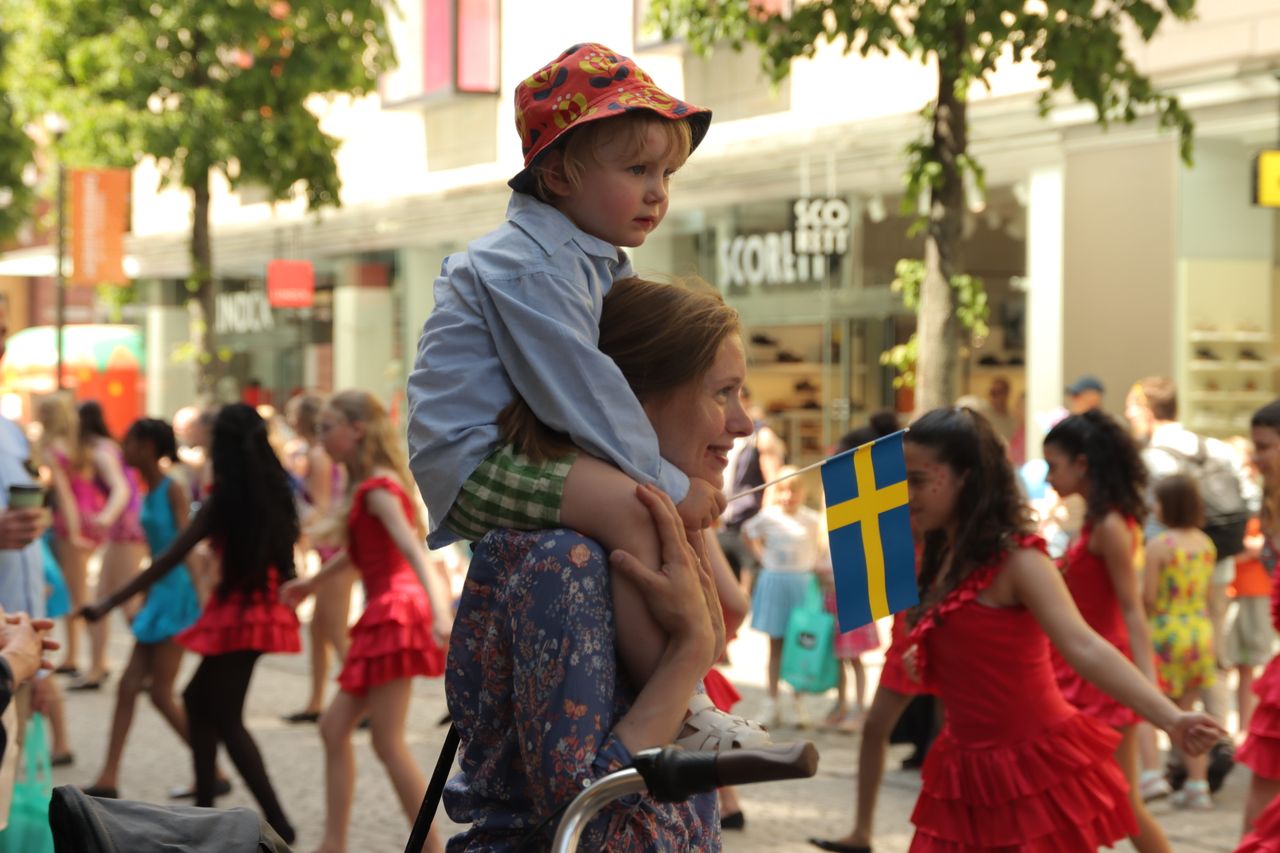

“Sweden settles the argument that capitalism works when it rests on empathy and equity.”
That’s marketing professor Scott Galloway, one of the few voices willing to say uncomfortable things plainly, with data behind them. I don’t disagree with his conclusion. Sweden is real evidence that capitalism, built on empathy and equity, produces a remarkable society.
But empathy and equity aren’t inborn traits in Swedes. They are part of Sweden’s culture, created by decisions made over centuries, creating traditions and rituals by people who could have chosen otherwise. And that distinction is the whole story.
Sweden has roughly 10.5 million people. Until quite recently, the overwhelming majority were ethnically Swedish, spoke one language, shared a religious history and inherited centuries of common culture before a single policy was written. The U.S. has 340 million people, a White majority population, diverse minority groups, and households that speak more than 350 languages.
Galloway answered a real question: Does empathetic capitalism work? But that’s not America’s question. Our question is harder: Does empathetic capitalism work when the population doesn’t already agree on who ‘we’ is? It’s also the one that determines whether the first answer is useful to us at all.
The Reality Everyone Overlooks
Hold Sweden up as a model, and someone will point out — correctly — that it’s a small, culturally unified country: until recently, mostly one people, one language, one shared religious history. The usual conclusion follows fast. The U.S. is too big and too varied for the model to transfer. Case closed.
The homogeneity is real, and it matters. Trust, in Sweden's model, is partly inherited — it’s easier to extend empathy to people who already look, sound and worship like you. But the shortcut smuggles in a second assumption beneath the first: that Swedish trust was simply handed down, inherited along with the language and the holidays. But Sweden didn’t just inherit trust. It built it, on purpose.
In 1766, Sweden became the first country to write government transparency into law. The Principle of Public Access guarantees citizens the right to see what their government is doing, on demand, no excuses. Renewed and protected for more than 250 years, that single decision, codifying government transparency, is a culture-shaping choice.
Think of it as a trust ledger. Every decision a government, an institution or a leader makes is either a deposit or a withdrawal. Culture is simply the compounding balance. Sweden’s ledger has been making deposits for two and a half centuries. America’s heterogeneity was never the obstacle to a healthy ledger. It is, and has always been, the actual condition we have to build the ledger for — and history is not neutral on what happens when leaders mismanage that condition rather than build for it.
What the U.S. Has Always Had to Manage
In Colonial Virginia, white indentured servants and enslaved and indentured Africans worked the same tobacco fields and — as the colony's elite discovered in 1676 — were capable of fighting on the same side. Bacon’s Rebellion united poor white and Black laborers against Virginia’s governing class and burned the capital down. The rebellion failed. The lesson it taught the planter elite lived on.
Historian Edmund Morgan, in his landmark American Slavery, American Freedom, traced what came next: a deliberate legal campaign to make sure that alliance never re-formed. The campaign drew a hardening line between white and Black labor — granting poor whites privileges withheld from Black people, while converting Black servitude into permanent, hereditary, race-based slavery.
The economics mattered: Lifetime, inheritable labor was more profitable than labor that eventually walked free. So did enforcement. A white servant who ran could vanish into the free population; a Black runaway could not. But the deepest driver was political. A multiracial coalition had just toppled the existing order once, and the elite needed a wedge that would not allow that to happen again.
That wedge was the largest withdrawal from the trust ledger in American history. It manufactured a culture of hierarchy and suspicion that has outlived every law that built it. That’s because culture, in the form of traditions and rituals, once created, becomes self-sustaining long after the people who made it are gone. This is not a 17th-century curiosity. It is the first American instance of a move leaders have been making ever since.
The Oldest Move in the Playbook
When leadership faces a problem, one option is to solve it. Another is to find a visible “other,” assign it blame and let resentment do the unifying work that competence was supposed to do.
Freedom House and others who study authoritarian movements call this scapegoating, and the mechanism repeats across eras and ideologies with unsettling consistency: Divide the population into an in-group and an out-group. Blame the out-group for what the in-group is suffering from, and manufacture cohesion through a shared enemy rather than earn it through shared results. It is cheaper than leadership, and corrosive to everything leadership is supposed to build.
Heterogeneity doesn't cause this. It is simply the raw material an opportunist exploits when no one has built something better with it — and scapegoating is, again, a withdrawal: spending the trust an institution needs for its long-term credibility to buy a short-term feeling of unity.
Sweden Banked Trust. We’ve Spent It.
Here is the comparison worth actually making. Pew Research has tracked American trust in the federal government since 1958, when 73% of Americans said they trusted Washington to do the right thing. By 1964, that hit 77% — and then, in barely a decade, collapsed to 36%, driven by Vietnam and Watergate. It never recovered. It sits in the 20s today.
What changed between 1964 and 1974? The decisions leaders began to make repeatedly and, just as often, what they decided to conceal. Vietnam, Watergate, Iran-Contra, the WMD intelligence behind the Iraq War: different decades, different parties, the same pattern. A decision goes wrong, and the next decision is concealment, which compounds the original trust withdrawal with a second one.
Sweden’s leaders made the opposite bet in 1766 and have renewed it ever since: Assume the public has the right to see what you’re doing. It’s a harder way to lead. It's also why their ledger still has a balance.
Diversity Wasn’t the Problem
I worked with a regional president — I’ll call her Renata — who ran a healthcare system spanning four states, four generations of staff and dozens of countries of origin. For years, leadership had blamed the diversity itself for the system’s coordination problems: slower consensus, communication breakdowns, conflicting norms about hierarchy and disagreement. “Culture clash” was the official diagnosis.
But it was the wrong diagnosis. The dysfunction was the residue of years of small decisions that had never built shared infrastructure — no shared norms, no Cultural OS underneath the variation. Every meeting where leadership let the friction slide rather than naming it was a small withdrawal, compounding.
Once Renata’s system built that infrastructure — explicit shared values, ritualized decision norms, the same expectations applied regardless of tenure or background — the complexity that had been treated as a liability became the system’s deepest source of new ideas, generating patient-care solutions a homogeneous staff would never have produced.
The people didn’t change. The culture did. A string of decisions, made deliberately instead of by default, started depositing into the trust ledger instead of draining it.
The Bigger Pie Principle
The model I use with leaders wrestling with this question is the Bigger Pie Principle: Heterogeneity, managed well, does not divide a fixed pie into smaller, competing slices. It grows the pie, and grows it for everyone with a slice in it.
Between 1990 and 2016, immigrants made up roughly 16% of U.S. inventors but were responsible for nearly a quarter of the patents filed. NBER research finds that an influx of roughly 10,000 immigrants into a county increases patents per capita by about 21% over a five-year period. Large-scale studies of millions of published papers — one in Nature Communications, another in PNAS — found ethnically and gender-diverse research teams produce more novel work and get cited more often than homogeneous ones. And the old fear underneath all of it, that newcomers take jobs from everyone else, doesn’t survive contact with the data. The job market isn’t fixed-sum.
None of this means difference is automatically an advantage. It has to be managed, or it produces precisely the friction critics predict. But managed well, the evidence holds across science, invention and economics: Heterogeneity is not the tax America pays for being large. It’s the asset Sweden never had the chance to draw on.
Three Practices for Leaders
What lessons can today’s leaders learn from Sweden?
1. Name the ‘othering’ instinct before it hardens into strategy
The temptation to blame a subgroup for organizational (and societal) friction is real. Leaders who build durable cultures interrupt it early. They name the instinct out loud and ask what the complexity is actually revealing about a missing structure rather than a flawed population.
2. Treat every decision as a deposit or a withdrawal
Culture is built decision by decision, behavior by behavior — what gets disclosed and what gets concealed. Leaders who build durable trust ask, before every consequential call, whether it's a deposit or a withdrawal. And they build shared infrastructure that lets people who differ in background and worldview still operate as one team with one standard.
3. Measure the size of the pie before debating who gets which slice
Organizations that frame internal disagreements as zero-sum — one department’s gain is another department’s loss — manufacture the scarcity mindset that makes diversity feel like a threat. Leaders who instead measure and communicate the value the whole team creates together change what people are fighting about, and often whether they’re fighting at all.
What Sweden Actually Teaches Us
Galloway is right that capitalism needs empathy and equity to work. He’s just describing the easier version of the experiment — a population that agreed on who belongs, governed for two and a half centuries by leaders who kept choosing to build trust instead of squander it.
The U.S. never had that starting condition, and our history offers two examples of what we did instead: The 17th-century elite spent trust to protect their power, and 20th-century leaders spent it to protect their mistakes. Neither failure was caused by who Americans are. Both were caused by decisions someone chose to make — which means the reverse is just as true: A culture built on decisions that keep depositing into the trust ledger has access to more ideas, more insight and more ways to solve problems than a homogeneous one ever will.
Sweden solved its problem, and kept a 250-year habit of deciding well. We have a different, harder problem — and a more interesting one. If we start making the decisions it actually requires, it’s also the more valuable one to solve.
If you’re leading an organization where complexity feels like an obstacle rather than an asset, I’d like to help you think it through. Book a 30-minute Insight Call with me and let’s talk about what's actually happening and what to do about it.

